
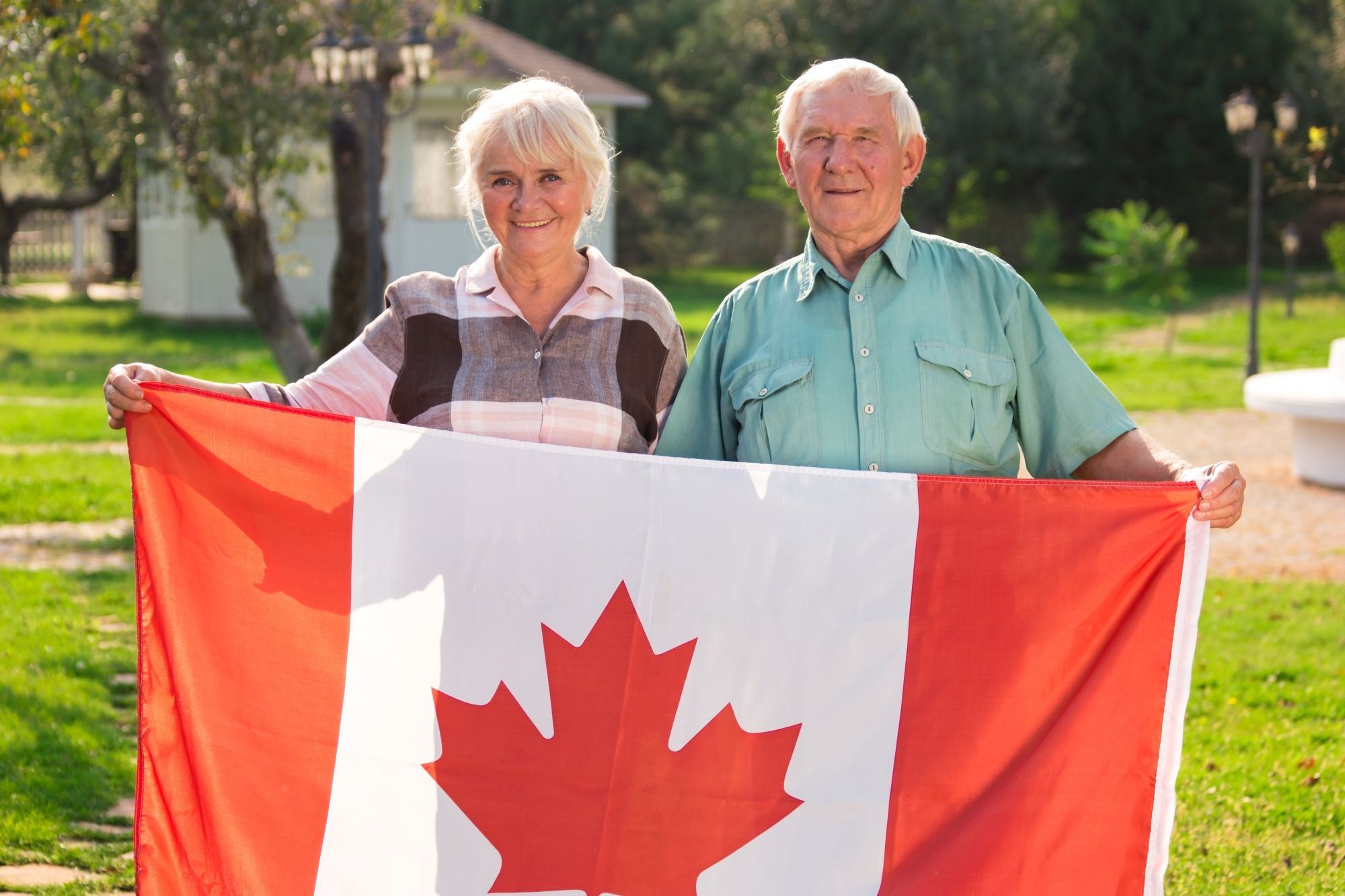
This page is for permanent residents ready to become Canadian citizens, and for Canadian families with children or grandchildren born abroad. Citizenship is the last step of the immigration journey; the application is shorter than a PR file, but the counting of days and the details of your history must be exact.
Who can apply
To apply for citizenship as an adult you must:
- be a permanent resident, with no unresolved questions about your status;
- have been physically present in Canada for at least 1,095 days (three years) in the five years before you apply, including at least 730 days as a permanent resident;
- have filed taxes for at least three of those five years, if you were required to;
- if you are 18 to 54, show English or French at Canadian Language Benchmark (CLB) 4 in speaking and listening, and pass the citizenship test;
- not be prohibited, for example by certain criminal charges or convictions.
Adults 55 and over, and all children under 18, are exempt from the language requirement and the test.
Counting your days
Physical presence means days you were actually in Canada. Time you spent in Canada as a temporary resident (visitor, student or worker) or as a protected person before becoming a PR counts as half a day for each day, up to a maximum credit of 365 days. This helps people who studied or worked here before landing.
Count every trip: a family visit to Kerala, a business trip, a day across the US border. Gaps between your count and your passport stamps, travel history or border records are a common reason an application is slowed down or questioned. Apply with a margin of days, not exactly 1,095.
Language and the test
IRCC accepts only certain documents as proof of CLB 4. Check its current list before you apply, and send proof that matches it exactly.
The citizenship test covers Canada's rights and responsibilities, history, geography, economy, government, laws and symbols. Most applicants take it online, with webcam monitoring, and have 30 days to complete it once invited. It is available in English or French, and you have three chances to pass. In-person and oral formats are available as accommodations.
Fees
IRCC's citizenship fees:
- $653 for each adult (18 and over), which includes the $123 Right of Citizenship fee;
- $100 for each child under 18.
Processing times change monthly; check IRCC's processing-times tool for the current estimate.
After you apply: the oath
After IRCC finds your application complete, it sends an acknowledgement of receipt. Applicants aged 18 to 54 are then invited to the test. Some files are selected for an additional review of documents. The last step is the citizenship ceremony, where you take the oath of citizenship. Everyone 14 and over takes the oath; children under 14 do not.
Keep your contact details up to date with IRCC while you wait, so that an invitation to the test or ceremony does not go unanswered.
Bill C-3: children born abroad to Canadians
For many years, a Canadian born outside Canada could not pass citizenship to a child also born outside Canada (the "first-generation limit"). Bill C-3 changed this. It received Royal Assent on 20 November 2025 and came into force on 15 December 2025.
- Born abroad before 15 December 2025 to a Canadian parent: many people previously cut off by the first-generation limit are now citizens automatically, including second and later generations born abroad.
- Born or adopted abroad on or after 15 December 2025, beyond the first generation: the Canadian parent must have spent at least 1,095 days in Canada before the birth or adoption to pass on citizenship (the "substantial connection" test).
- The law also restores citizenship to some people who lost it under older rules.
If this may apply to your family, apply for a citizenship certificate as proof, then use the certificate to apply for a Canadian passport. This matters for Kerala families with children or grandchildren born in the Gulf, the United States or elsewhere to a Canadian parent.
Common mistakes
- Applying a few days short, or with trips left out of the travel history.
- Missing tax filings for the years being counted.
- Sending a language document IRCC does not accept.
- Not declaring a charge or an immigration issue, even an old one.
- For Bill C-3 cases, assuming a child is not a citizen and applying for the wrong thing, such as a visitor visa.
How Polinsys helps
We check your days against your travel records before you apply, confirm the tax years and language proof, and flag anything in your history that needs explaining. For families affected by Bill C-3, we look at each generation's dates and help you apply for the right proof. Joy Stephen, RCIC (CICC licence R419719), represents the application and stays with you until the oath. Ask your questions at our free Friday Q&A: FREE Webinars: Resource Guides and AR Q&A.
Official sources
Rules change often. These are the government pages this page was checked against on October 2, 2026.
Related pathways
Ask about Canadian citizenship
Tell us a little about you. Our authorized representative's team replies — and an honest assessment comes before any fee.